
CCNA Version 2.0: Blueprint Deep Dive
Cisco announced CCNA 200-301 Blueprint Version 2.0 on May 20, 2026. If you’re studying for CCNA, of course you want to know: What’s in it? What’s changed? What new topics do I need to learn? WHAT’S ON THE TEST? This is the post to answer those questions. Let’s do it!
Read this Post, or Watch this Video
I made both a video and a blog post about this topic – so either watch the video or keep reading – your choice!
Other Posts/Videos in the 2026 CCNA V2.0 Announcement Series
I have planned some posts and videos related to the CCNA V2.0 release. The list may change, but here’s the plan.
This video is the 2nd one in the list. If you haven’t looked at the first post yet, you’ll want to start there for context!!
-
- November, 2026: How to Study for CCNA as CCNA 2.0 1st-Day-to-Test Approaches
- November, 2026: Update on CCNA Book Plans
- January, 2027: How to Use the CCNA V1.1 Books for CCNA V2.0 Study
#1 Blueprint Change: Troubleshooting Returns!!
The biggest change in the CCNA V2.0 blueprint, compared to the previous one, is how much Cisco bumped up the challenge level across many topics. Topics that required only an explanation or description now require configuration. Some that required configuration now require troubleshooting. And it’s not juse a few – it’s a big enough shift that in my opinion, the shift is the biggest news for this version change. And I’ve been there for all the CCNA blueprint announcements.
A bit of history helps explain what we’re seeing in this shift, especially the addition of new topics using “troubleshoot” and “diagnose” as verbs. Figure 1 shows the most recent exam release years for CCNA with the percentage of CCNA exam topics that used the “troubleshoot” verb (or similar performance-level verb, such as diagnose). Before 2020, CCNA had a lot of troubleshooting. Then it disappeared in the 2020 release (CCNA 200-301 Version 1.0). And was still gone for CCNA 200-301 Version 1.1 (2024). Now it’s back in style, with 28% of the exam topics by exam topic count.
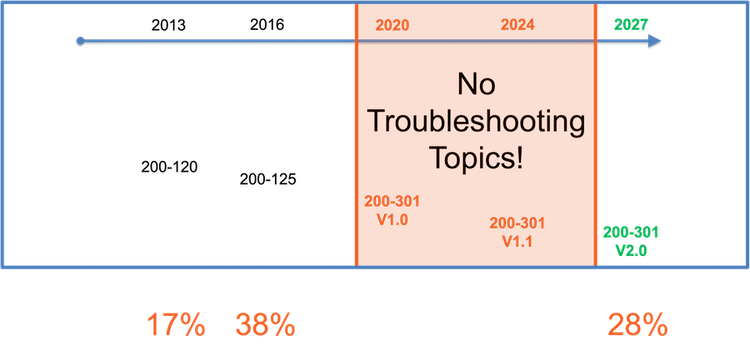
Figure 1: Most Recent Five CCNA Blueprints: Troubleshoot Verb Analysis
Using the exam topic count is just a rough measurement to get a general idea. But sticking with it for one more concept, consider the now-fading CCNA V1.1 and the arriving CCNA V2.0. As a rough measure, I analyzed each blueprint by counting exam topics. I combined verbs into similar categories, as shown in Figure 2. Then I counted the exam topics in each, compared the two blueprints, and calculated the percentage of exam topics for each general type. It shows the stark contrast in performance levels required in the V2.0 blueprint vs. V1.1.
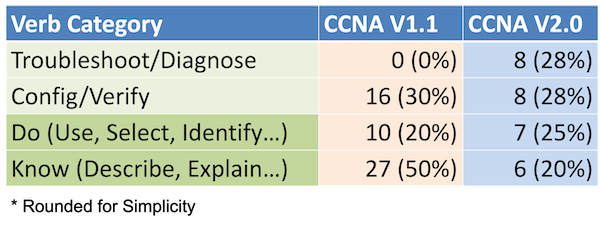
Figure 2: Comparing Verb Categories, CCNA V2.0 Vs. V1.1
Learning and Testing for Configure, Verify, Diagnose, Troubleshoot
The exam topics with a two-digit identifier in the blueprint – called “items” by Cisco – begin with a verb. Those verbs have specific meanings in the learning and assessment world based on a model called Bloom’s Taxonomy. Figure 3 collects the verbs used in the new CCNA V2.0 blueprint into four groups of similar performance levels.
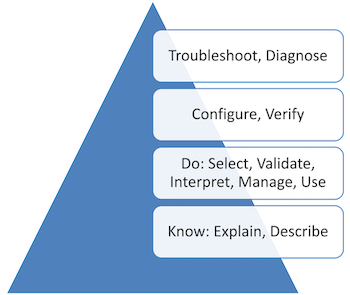
Figure 3: Verbs Used in CCNA V2.0 Blueprint, Grouped
It’s a bit obvious, but the higher-performance verbs, especially confingure, verify, diagnose, and troubleshoot, require more of your time to learn as compared to the lower performance levels. Any Config/Verify or Troubleshoot topic will require you to practice the topic in lab, multiple times, to be ready for the exam. An exam topic with a Describe or Explain verb won’t require any lab time – so far less time to master.
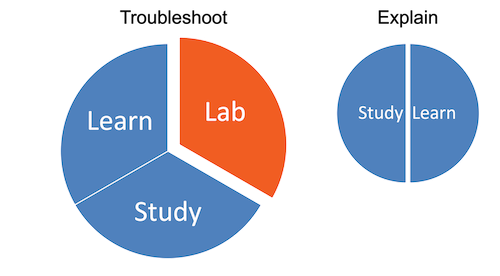
Figure 4: Study Time Difference – Knowledge Vs. Troubleshoot Verbs
That was obvious – but here’s your action plan. Lab lab lab! Be smart about it, and here’s a plan:
- Practice in Lab!
- Use labs here at certskills.com! Lots of them, freely available.
- Use my YouTube Ad Hoc Labs! Those are labs explained in a video, no blog post.
- Use my CML-Free YouTube playlist!
In particular, you should learn about Cisco Modeling Labs (CML). There is a free version, and it’s worth checking out. Learn about it in the videos at my YouTube channel (link just above). Why?
- Lab (Lablet) questions on the CCNA exam use CML behind-the-scenes!
- CCNA lab questions use the same IOL-L2 and IOL-L3 images available in CML-Free – so practice with them at least a little!
Additionally, check out the demos of the user interface for lab questions on the exam:
- A Cisco Live on Demand presentation about CCNP Enterprise: Session BRKCRT-2008, from Cisco Live, San Diego, 2025. Google it. Look to the 51:30 mark of the video for the demo.
- A permanent page with an exam tutorial from Learn with Cisco.
Why do the demos of the lab user interface matter so much? Well, ponder it for a moment. If the V1.1 exam had 0% troubleshooting and 25% config/verify topics, and the new V2.0 exam has 30% and 25%, respectively, wouldn’t you expect to see more lab questions? I think we will.
#2 Blueprint Change: New Topics, New Depth
As with any Cisco exam blueprint change, the CCNA V2.0 blueprint requires you to learn new topics. But the bump in performance level is also a big deal. So let me walk you through the new topics to learn with V2.0:
- More Depth: Old topics for which you need deeper knowledge and skills (E.G., formerly “describe”, now “troubleshoot”).
- New Topic: Topics that are brand new for the new blueprint.
New Topics Not in the Old Blueprint
The simplest category is for technical topics that are in the V2.0 blueprint but not mentioned in the V1.1 blueprint. Straightforward. Here’s a list:
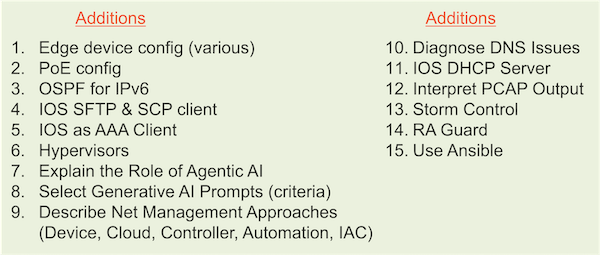
Figure 5: New Topics in CCNA V2.0
Topics Removed from the Old and Not in the New
This next category is surprisingly subtle. Some nouns disappear from the blueprint. But are they truly gone from the exam? That takes some thoughtful consideration. Here’s a list of the nouns and phrases I think are removed and are actually gone from the V2.0 exam:
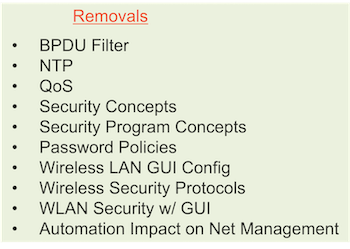
Figure 6: Topics Removed from CCNA V1.1 for V2.0
My comments may have left you scratching your head a bit. Could Cisco remove an exam topic, but you still need to know the content? Yes. Here’s the idea:
- Cisco removes the exam topics from the blueprint.
- The content described by the removed exam topic is prerequisite knowledge required by some exam topic in the new blueprint. That requires analysis and discernment, and it’s subjective.
So here are the exam topics – more than a few – that disappear from the V1.1 blueprint vs. the V2.0 blueprint, but for which you still need to know at least some of what’s in the exam topic. That is, the topics are prerequisites for exam topics in the V2.0 blueprint.
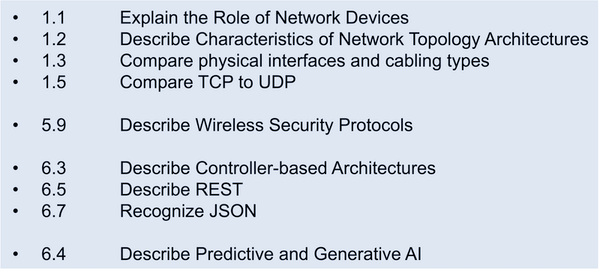
Figure 7: Topics Removed, But I Think They Are Still Prereqs
The good news here is that, in every edition of the CCNA books, of course, we have to figure out any prerequisite content we think needs to be in the book. So we dig into those depths, make those judgment calls, cover the basics in the books, and then build up to the depth required for the actual exam topics.
Old Topics with Higher Performance Levels
Next up, those exam topics that were in both the old and the new blueprints, but Cisco upped the performance level of the verbs. Here’s a breakdown. Figure 8 lists a paraphrase of those exam topics, with the old verb text with a line through it, and the new higher-performance verbs on the left.
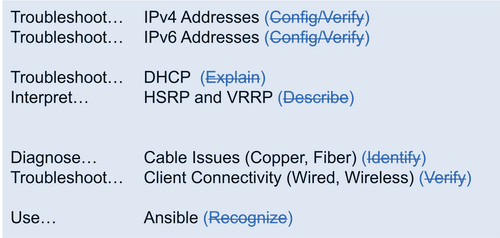
Figure 8: Topics with Increased Performance Level for CCNA V2.0
You may be wondering: Are there any exam topics that remained, but Cisco reduced the performance level? No. Some remain the same, some are reworded and have a similar performance level. But none remain and have a reduced performance level.
#3 Blueprint Change: Wendell’s Top 5 New Topics
You can, and should, look for Cisco’s commentary that details all the updates to the blueprint. You want to look for the “CCNA 2.0 Exam Release Notes”. To get there:
- Navigate to www.cisco.com/go/certroadmap
- Scroll down, and choose “CCNA” from the tabs for the different certification tracks.
- Look around for the CCNA 2.0 Exam Release Notes and click.
So rather than repeat the same information, I’m going to talk about my top 5 new topics and explain why. Really, it’s top 7 as you’ll see. But it’s a top N list. Here we go! Counting down from#5 to #1:
Favorite #5: Diagnose DNS Issues
First, the next figure shows the text of the exam topic – new for CCNA V2.0:
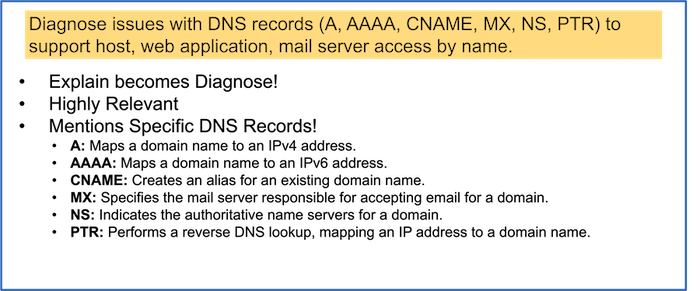
Figure 9: CCNA 2.0 Exam Topic: Diagnose DNS
In the V1.1 blueprint, DNS has only a minor mention, with “Explain the role of… DNS”. Blueprint V2.0 goes into detail on the six primary DNS record types and the need to “Diagnose issues” with them. What does that mean? Diagnose means to determine the root cause of a problem, but does not then require you to fix the problem. With DNS, that might mean you would analyze symptoms and behavior, including command output, and decide what is wrong with the DNS configuration – without needing to configure the DNS to fix the problem.
Why a top 5 topic? It’s the real world. Cisco wanted to make CCNA more relevant to hiring managers. DNS and DHCP are used pervasively, and knowing how to think through problems (diagnose) is a key skill.
Favorite #4: Troubleshoot DHCP (DHCPv4)
This next topic makes my top 5 list for the same kinds of reasons. Most client devices use DHCP (DHCPv4) to lease their IPv4 address. To be a useful networker, you need to know DHCPv4, recognize symptoms that could point to a DHCP problem, identify the problem, and fix it. Cisco gave us this exam topic for V2.0:
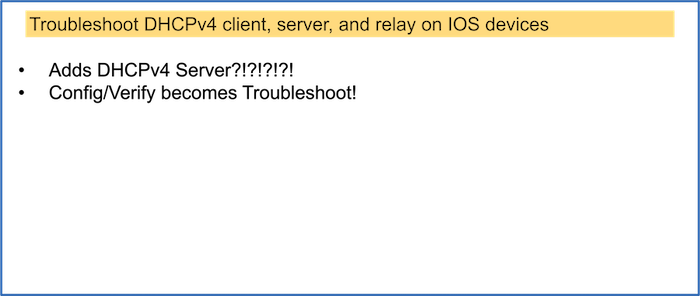
Figure 10: CCNA 2.0 Exam Topic: Troubleshoot DHCP
DHCP client and DHCP relay were in the V1.1 blueprint, but the exam topics asked us to configure and verify those features. The new exam topic adds DHCP server and bumps the level to troubleshooting. I chose this one as top 5 mainly because of the bump to troubleshooting. You really should be able to look at clients and tell if they have leased an address and learned other settings. And if not, you should recognize from host command output what the likely root causes are of the DHCP problem – and you should be able to fix those, if possible, on the host or the router.
The exam topic also adds “DHCP server… on IOS devices”. In a production network, you’re not likely to use the DHCP server feature on a router. However, it’s great for learning DHCP! Learn it, lab it, configure it wrong, see the symptoms, and get a better idea of how to troubleshoot DHCP problems.
Favorite #3: Switch Access Port Config – For Various Endpoints (Edge-hosts)
My next choice in the top 5 almost got the #1 spot because it’s just so different than most other CCNA exam topics. It has two lists in it, but without lettered items for either list. It just looks different and interesting. It also collects a large number of configuration topics together, while also adding some context and richness to the real-world deployment scenarios CCNAs might need to be ready for. It’s just got a lot of layers.
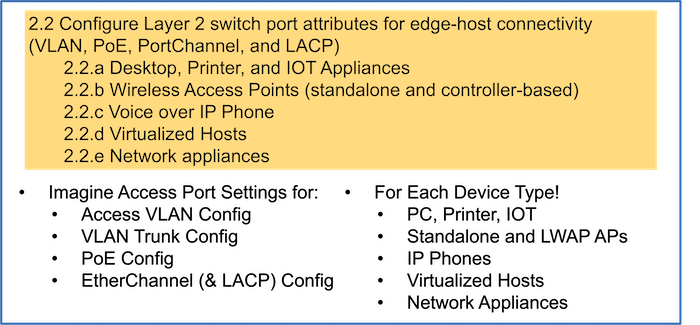
Figure 11: CCNA 2.0 Exam Topic: Configure… Access Ports… Various Features… Various Endpoints
Consider the first list. It details technologies that you can configure on a LAN switch. It includes access VLANs, VLAN trunking, and EtherChannels (all in the V1.1 blueprint), plus Power-over-Ethernet (PoE) config, added as a new config topic for the V2.0 blueprint.
Additionally, and not in the V1.1 blueprint, the second list describes types of “edge-hosts” or endpoint devices that might connect to the access switch. Depending on the type of device, you might expect to use different settings for the features from the first list. From the wording of this exam topic, I think you need to know which endpoints typically need which features.
So, you need to be able to look at a diagram, identify a particular type of endpoint connected to a switch, determine which features should be configured, and finally configure them.
Favorite #2: Use Ansible
CCNA is full of exam topics with the “configure and verify” verbs. The expectation is that you do that using the CLI. But did you know you could also use an Infrastructure-as-Code (IAC) tool like Ansible to control and manage the device configurations as well? As it turns out, among the available tools, Ansible wins the popularity contest for use in Cisco networks. It’s practical, and people use it in the real world, so Cisco bumped the performance level up to “use”, so you need some skills in using Ansible for the exam.
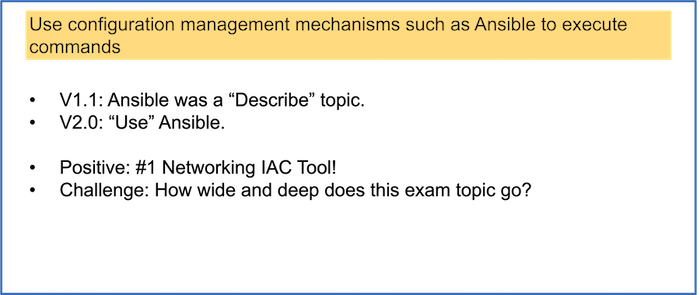
Figure 12: CCNA 2.0 Exam Topic: Use Ansible
Cisco wants the CCNA certification to demonstrate the candidate is job-ready. Knowing at least the basics of how to use Ansible is a positive step in the right direction.
Favorite #1: Describe Network Management Approaches
Really, Wendell? If you were just reading the blueprint, would you think I would pick the exam topic that begins “Describe network management approaches…” as my #1 favorite new CCNA 2.0 exam topic? I bet you wouldn’t. But here it is.
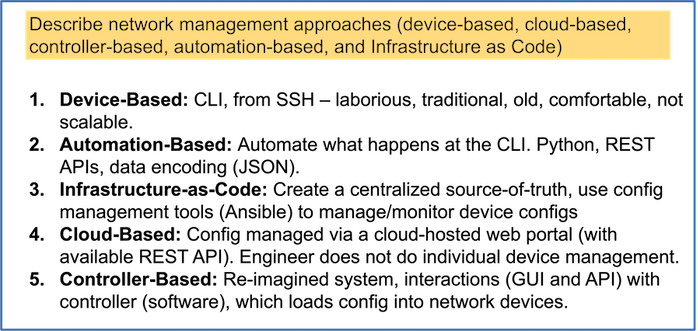
Figure 13: CCNA 2.0 Exam Topic: Describe Network Management Approaches
So, what is it? It’s a describe-level topic. But it lists five different approaches to how to operate and manage a modern enterprise network. Let me define each of those approaches briefly:
1.Device-Based: CLI, from SSH – laborious, traditional, old, comfortable, not scalable.
2.Automation-Based: Automate what happens at the CLI. Python, REST APIs, data encoding (JSON).
3.Infrastructure-as-Code: Create a centralized source of truth, use config management tools (Ansible) to manage/monitor device configs
4.Cloud-Based: Config managed via a cloud-hosted web portal (with available REST API). An engineer does not do individual device management.
5.Controller-Based: Re-imagined system, interactions (GUI and API) with controller (software), which loads config into network devices.
I love this new exam topic. It raises important topics in today’s networking world. But it keeps the level pretty low. It gives you a requirement to learn the big ideas of each, enough so you can answer a general interview question. But most importantly, preparing for this topic will make you pause and think. It will require you to step back, ponder many of the topics you’ve learned in CCNA, and categorize them based on these approaches.
We’ll be locating our coverage of this topic late in the Volume 2 book, using it as a sort of capstone to the entire study process. I’m really looking forward to what co-author Jason does with this content!
Oh Yeah: And AI!
Well, I said top 5, and then two more…
So, Cisco took the one AI-related exam topic from the V1.1 blueprint, tossed it out, and replaced it with two new AI-related topics:
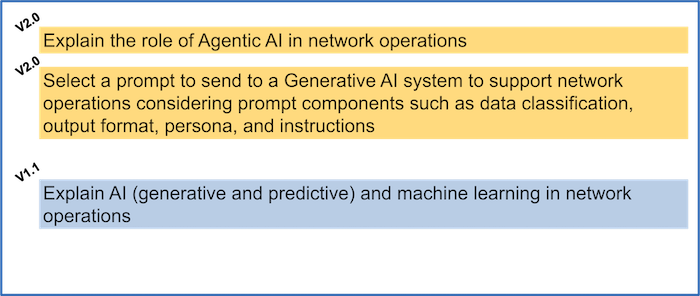
Figure 14: CCNA 2.0 Exam Topics: AI
Here we are in 2027, and it seems that we’re all feeling a bit of AI fatigue. AI is everywhere and in everything. But of course, it’s legitimately in CCNA. In your job interviews after passing the CCNA 2.0 exam, you can bet AI will be one of the topics. So what did Cisco add?
First, Cisco added one about creating prompts. Just a foundational concept related to AI security. The end of the prompt gets to the core of the topic, including:
Data Classification: Categorizing data based on sensitivity (e.g., public, private, confidential) to determine appropriate access controls and protection measures.
Output Format: Specifying the desired structure and presentation of AI-generated results (e.g., text, code, images) to ensure usability and prevent unexpected or harmful outputs.
Persona: Defining a fictional character or identity that an AI system adopts when interacting with users, influencing its communication style and trustworthiness.
Instructions: Clear and specific guidelines given to an AI system, dictating its tasks, behavior, and limitations to prevent misuse or unintended consequences.
The exam topic on agentic AI introduces a broad topic: an architecture for controlling and operating networks using AI. The methods go far beyond text-based chat interactions, using agents and API calls to pull telemetry data from devices, while using LLMs to analyze, select, and control monitoring and troubleshooting tasks.
Key Links
Here are a few helpful links related to the announcement.
Wendell Odom
- Blog: www.certskills.com
- YouTube Channel Advice and News Playlist
- YouTube CCNA Course Playlist
- YouTube CML Free Lab Playlist
Cisco Press
Note: Pages for the new products will not be available until about 5 months before product release. Stay tuned for updates.
Cisco
- Cisco Certification Roadmap: www.cisco.com/go/certroadmap
- Cisco CCNA page: www.cisco.com/go/ccna
- Cisco Learning Network CCNA community